


How Much Weight Can a Semi Trailer Carry in Australia?
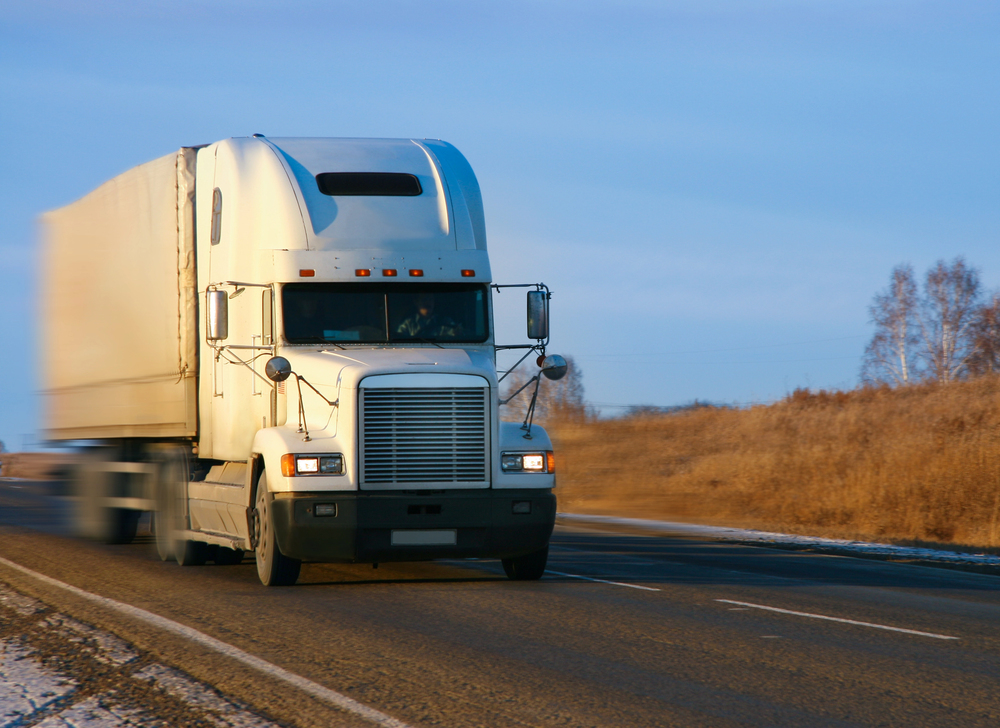
Road freight is still one of the optimal modes of transport for goods across Australia, and a vast network of logistical vehicles keeps the country moving on a day-to-day basis. But how much weight can a semi-trailer carry in Australia, and how many tonnes can a truck carry?
As trucks come in all shapes and sizes, the actual answer to this question can be a little complex. However, we’ve tried to simplify it with this guide, giving you the maximum weights, defining key terms, and also breaking the maximums down into different categories.
Read on to discover more.
Understanding Truck Types and Configurations
Trucks come in various types and configurations, each designed for specific purposes and loads. Understanding these differences is crucial for ensuring compliance with regulations, safety, and efficient operations. The main types of trucks include rigid trucks, articulated combinations, and road trains.
Rigid trucks have a fixed body and can be used for various applications, including hauling shipping containers. These trucks are versatile and can handle a range of cargo types, making them a common choice for many transport needs.
Articulated combinations consist of a prime mover connected to a semi-trailer, offering greater flexibility and capacity. This setup allows for easier manoeuvrability and the ability to detach the trailer when needed, making it ideal for long-haul transport.
Road trains, on the other hand, are composed of multiple trailers connected to a prime mover, allowing for the transportation of large and heavy loads. These configurations are typically used in remote areas where large quantities of goods need to be moved over long distances.
Understanding the specific requirements and capabilities of each truck type is essential for optimising your transport operations and ensuring that you meet all regulatory standards.
Payload/Carrying Capacity and Towing Capacity
Truck’s carrying capacity is determined in two different ways, payload capacity and towing capacity. While these two ideas are linked, they are not the same.
The payload or carrying capacity refers to your cargo. It’s essentially the weight of the cargo by itself.
The towing capacity is how much the truck is able to pull, once everything is taken into account, including the weight of the truck and cab and any containers or equipment. The towing capacity will always be far greater than the payload capacity.
Curb Weight and Gross Vehicle Mass
As you calculate your truck’s weight limits, you also need to recognise how the weight of the truck itself is represented. Truck weights may be represented as curb weight, own weight, or gross vehicle mass.
The curb weight is the total weight of the vehicle itself, including fuel and equipment, but excluding passengers, driver and cargo.
The gross vehicle mass is the curb weight, plus the weight of the cargo, passengers, and drivers.
Maximum Weights for Trucks and Semi-Trailers in Australia
The maximum combined weight is 42,500 kg (42.5 tonnes) when fully loaded, and this includes the curb weight of the truck plus the container and the trailer.
This is a slight oversimplification, and there are lots of notes, caveats, and exceptions that can be applied to this. However, this figure does tell you the maximum permitted weight for a rigid truck or single semi-trailer in Australia, under the standard Heavy Vehicle National Law (HVNL) rules.
Even if the total gross vehicle mass is within this limit, you’ll still need to make sure that the cargo itself doesn’t exceed the maximum.
For a standard truck, the maximum cargo weight is:
- 26,270 kg (26.27 tonnes) in a 20-foot container (28 cubic metres)
- 24,800 kg (24.8 tonnes) in a 40-foot container (56 cubic metres)
- 24,530 kg (24.53 tonnes) in a 40-foot high cube container (66 cubic metres)
For a side-loader truck, the maximum cargo weight is:
- 19,270 kg (19.27 tonnes) in a 20-foot container (28 cubic metres)
- 17,800 kg (17.8 tonnes) in a 40-foot container (56 cubic metres)
- 17,530 kg (17.53 tonnes) in a 40-foot high cube container. (66 cubic metres)
Weight Limits Across Different Categories
In Australia, rigid trucks and semi-trailers are generally divided into six categories. Each category refers to how many axles the vehicle has, which has a direct impact on the carrying and towing capacity of the vehicle itself.
Here are the weight limits across these six categories:
| Truck or Trailer Category | Maximum Weight (gross vehicle mass) | Maximum Weight with Concessional Mass Limit | Maximum Weight with Higher Mass Limit |
| Common two axle rigid truck | 15,000 kg (15.0 tonnes) | Not permitted | Not permitted |
| Common three axle rigid truck | 22,500 kg (23.0 tonnes) | 23,000 kg (23.0 tonnes) | 23,000 kg (23.0 tonnes) |
| Common four axle twin steer rigid truck | 26,500 kg (26.5 tonnes) – Non load sharing27,500 kg (27.5 tonnes) – Load sharing | 27,000 kg (27.0 tonnes) – Non load sharing28,000 kg (28.0 tonnes) – Load sharing | 27,000 kg (27.0 tonnes) – Non load sharing28,000 kg (28.0 tonnes) – Load sharing |
| Common three axle semi-trailer | 24,000 kg (24.0 tonnes) | Not permitted | Not permitted |
| Common five axle semi-trailer | 39,000 kg (39.0 tonnes) | 40,000 kg (40.0 tonnes) | 40,000 kg (40.0 tonnes) |
| Common six axle semi-trailer | 42,500 kg (42.5 tonnes) | 43,500 kg (43.5 tonnes) | 45,500 kg (45.5 tonnes) |
Absolute Maximums — How Much Weight Can a Semi-Trailer Carry in Australia?
You might have noticed something quite interesting about the table above — the presence of concessional mass limits (CML) and higher mass limits (HML). In some cases — such as with the six axle semi-trailer — these limits push the upper weight limit beyond the 42.5-tonne maximum.
A concessional mass limit is a revised maximum that you can use if you have signed up to the National Heavy Vehicle Accreditation Scheme (NHVAS). If you have accreditation under this scheme, your vehicles and payloads may be assessed outside of the standard framework. If the truck and payload is deemed safe, you will be able to enjoy a slightly higher carrying capacity.
A higher mass limit works in the same way as the concessional mass limit. It is applied in certain circumstances for those who have signed up with NHVAS. However, the HML is a little higher than the CML.
It is possible for freight vehicles in Australia to exceed even these higher limits. However, this requires additional trailers and couplings — the payload cannot be carried on a single truck, or in a single semi-trailer. For example:
- A common 9 axle b-double set-up, with two trailers, has a gross vehicle mass limit of 62,500 kg (62.5 tonnes) as standard, 64,500 kg (64.5 tonnes) with the CML, and 68,000 kg (68 tonnes) with the HML applied.
- A common BAB quad road train, with four trailers, has a gross vehicle mass limit of 119,000 kg (119.0 tonnes) as standard, 121,000 kg (121.0 tonnes) with the CML, and 130,000 kg (130 tonnes) with the HML applied.
Ensuring Compliance and Safety
Ensuring compliance with regulations and safety standards is critical when operating trucks. This includes adhering to weight limits, axle configurations, and loading requirements. Overloading a truck can lead to reduced fuel efficiency, increased wear and tear, and a higher risk of accidents.
To avoid these consequences, it’s essential to calculate the truck’s carrying capacity accurately, taking into account the weight of the vehicle, cargo, and any additional accessories or equipment. This means understanding the gross vehicle mass (GVM) and ensuring that the total weight does not exceed this limit.
Regular maintenance and inspections are also crucial for ensuring the safety and reliability of trucks. By keeping your vehicles in good condition, you can prevent breakdowns and reduce the risk of accidents on the road.
By understanding truck types, configurations, and capacities, operators can ensure compliance with regulations and safety standards, ultimately reducing the risk of accidents and promoting efficient operations. This not only helps in maintaining the integrity of the transport process but also ensures the safety of all road users.
Truck Tarps to Support You on the Journey
Whether you’re transporting a small but important cargo to the next town or you’re hauling a huge payload state-to-state and coast-to-coast, you need equipment you can rely on. This includes truck tarps.
Here at Bee Jays Canvas, we offer a broad range of robust and reliable tarps, each one designed to keep your cargo safe and secure out there on the road. Take a look at our range today, and find what you need.
Or reach out to our team if you have any questions or queries about what we can provide.
This article is for informational purposes only. While we strive for accuracy, we cannot guarantee it. Please follow state and national regulations and consult an expert for guidance.
What our customers say
