


Choosing the Best Materials for Your Shipping Container Roof

Shipping Container Roofs
Shipping containers are built tough. They are most commonly used in transport & logistics, however, it’s not uncommon for them to be used as temporary shelters, storage areas or even work stations. A secure shipping container roof can help to secure your goods during transit, meet safety restraint guidelines, keep your machinery dry, or provide adequate shelter throughout the night.
We will cover the types of shipping container roofs that are available, when to use a tarp system, and how to choose the right shipping container roof for your project.
Why You Need a Shipping Container Roof
When transporting valuable cargo, you need to consider the conditions while in transit. Open-top containers are often exposed to rain, dust, UV and debris, damaging their contents. A strong container tarp will help to:
- Protect goods from water
- Keep machinery, pallets and bulk materials clean & dry
- Improve security during transport & storage
- Prevents contamination
- Supports compliance with OH&S and environmental requirements
Custom-made Australian transport-grade PVC is available and can be made to fit anything from a 40-foot to a 20-foot container. For more information, contact the friendly team at Bee Jays.
Types of Shipping Container Roofs
PVC Container Covers
These covers use tensioned PVC that is stretched over a steel frame. They span between two shipping containers to create a wide, weatherproof space. They’re fast to install, cost-effective, and strong enough for long-term outdoor use. Unlike most solid steel roofing options, fabric structures can be disassembled and relocated if needed. They’re often used in mining, agriculture, logistics, and construction.
Common Uses:
- Equipment and vehicle structures
- Temporary workshops
- Dry storage

Container Roof Tarps
Container roof tarps are heavy-duty tarpaulin systems fixed over the top of a shipping container. They provide a fast, cost-effective way to protect goods stored or transported in open-top containers. Made from durable PVC or polyethylene, these tarps are designed to withstand rain, dust, UV and general site wear.
Common uses:
- Protecting goods in open-top containers during freight
- Assisting with load restraint compliance
- Preventing water, dust and debris from damaging cargo
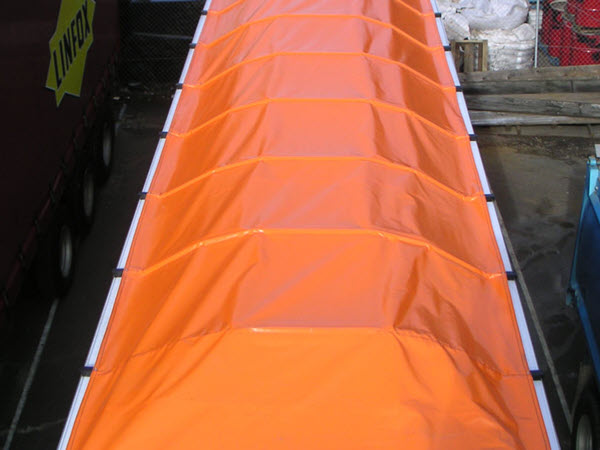
Retractable Roll Tarps
Retractable roll tarps are sliding or roll-up tarp systems designed to cover and uncover loads quickly. They are commonly installed on open-top containers, trailers and trucks when regular access is needed. PVC roll tarps are ideal for operations that require fast loading and unloading while still meeting load restraint guidelines.
Common uses:
- Quick-access load systems
- Securing loose materials such as gravel, grain or green waste
- Covering bulk loads in open-top containers.
Steel Roof Structures
Typically used to create shipping container shelters or storage areas, steel roof structures are attached directly onto the container using brackets or base plates. They provide strong, durable, long-term cover and are especially useful for protecting equipment.
Common uses:
- Covering loading zones
- Storage areas for heavy machinery, pallets or drums
- Weather-protected workspaces
Using a Tarp Roof for Shipping Containers
Tarp roofs are one of the most practical and cost-effective solutions for covering open-top shipping containers. These heavy-duty tarpaulin systems are fixed over the container, providing excellent protection against weather conditions, debris, and contamination.
Key benefits include:
- Quick Installation: Tarp roofs can be set up fast, making them ideal for both short and long-term use.
- Cost-Effective: Compared to steel or fabric structures, tarp systems offer a budget-friendly option without compromising on durability.
- Flexibility: Tarps can be easily removed, making them ideal for temporary or mobile storage.
- Custom Fit: Tarps can be custom-made to fit any container size, from 20-foot to 40-foot containers.
How to Choose the Right Shipping Container Roof
Choosing the right container roof depends on how and where you are using it. The wrong cover can lead to damaged goods, non-compliance with load regulations (leading to fines) or wasted time on site. When choosing which roof is right for your container, consider the following:
Weather Conditions
Your container roof will need to be able to withstand the elements. High UV exposure and frequent rain can quickly break down some tarp materials, or, in the case of metal roofs, lead to corrosion if not properly treated or maintained.
At Bee Jays, our shipping container covers are made using Australian transport-grade PVC, which is both waterproof and designed with special anti-rip material.
Type of Cargo
Different types of cargo will require different methods of transportation and storage. For powders, grains and other loose cargo, you may consider using a PVC aligner, whereas for heavy or bulky items, such as machinery, you may instead want a metal shipping container roof.
Access Requirements
Will you need to access or check the cargo frequently? For these cases, you may want to consider using a PVC tarp or a retractable roll tarp. Roll tarps are easy to cover and uncover, reducing the time and effort it takes for the driver.
Maintenance
When choosing your shipping container roof, consider ongoing maintenance. Metal roofs can be harder to repair if damage occurs. Tarp systems are easier to maintain and repair if anything goes wrong. A fast and reliable tarp repair service can be arranged on-site. Simply give the team a call for more information.
Not Sure? Give us a Call
If you are still unsure what type of shipping container roof is right for your project, give the team at Bee Jays a call. Our team can assess your container type, cargo, and site conditions to recommend the most practical and cost-effective solution.
We have helped many B2B clients across transport, mining, agriculture, and industrial sectors find the right tarping systems. From standard container roof tarps to retractable roll systems and custom fabric structures, we provide solutions that protect your goods, keep you compliant with safety guidelines, and reduce downtime.
Our team offers ongoing support, including installation advice, maintenance tips, and on-site tarp repair services. Contact us today to discuss your project.
What our customers say
